Opsarionexor
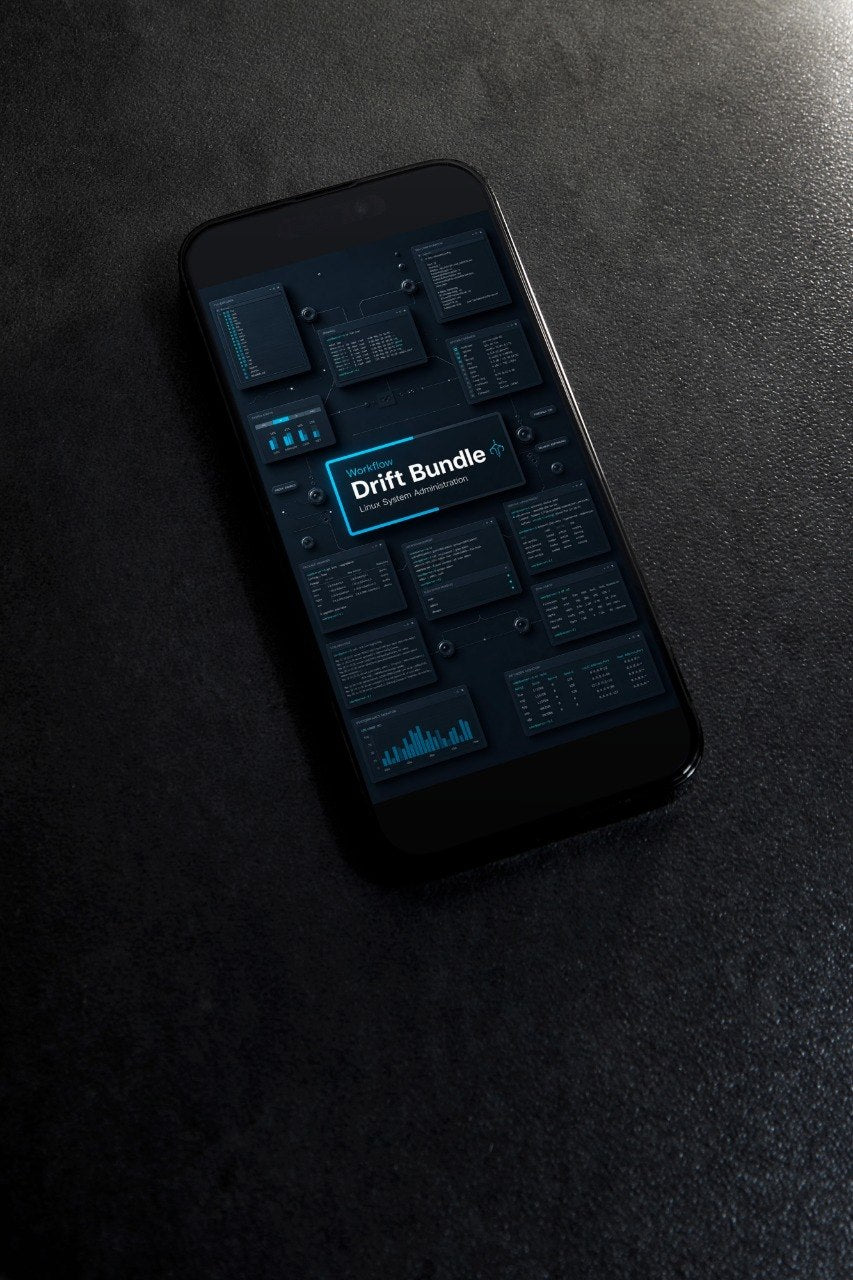
Drift Bundle
Drift Bundle
Couldn't load pickup availability
- ⬇️ Digital file available after purchase
- 🗂️ Long-term availability
- 🔒 Secure checkout
- 🗓️ Content updated in 2026
Self-paced learning overview
Share
Problem Statement
As administrative environments become more detailed, system behaviour can begin to drift away from its intended configuration. Small changes to services, permissions, scheduled operations, storage settings, or network rules may accumulate over time. When these changes are not recorded or reviewed, diagnosing issues becomes more difficult.
The Drift Bundle focuses on identifying, documenting, and correcting configuration differences through careful observation and controlled administrative work.
Solution
The Opsarionexor Drift Bundle introduces practical methods for reviewing system state, comparing configuration records, tracing changes, and restoring consistent administrative conditions.
The course also introduces configuration baselines. These reference points help learners describe how a system is expected to behave, making later reviews clearer and more organized.
What’s Inside
The Drift Bundle includes modules on configuration comparison, service review, permission auditing, scheduled operation analysis, storage state inspection, network rule review, system records, and restoration planning.
Learners practise identifying differences between recorded and current settings, tracing the possible source of a change, and preparing a controlled correction plan. The course also explains how to divide complex issues into smaller areas for review.
Who Is This For?
It is suitable for developing administrators, technical support staff, infrastructure learners, developers maintaining technical environments, and anyone who wants to improve configuration review and change-tracking habits.
What You’ll Learn
- Create clear configuration baseline records
- Compare current settings with documented conditions
- Identify changes in service configuration
- Review permission and ownership differences
- Examine scheduled operations for missing or altered settings
- Compare storage states and mounted locations
- Review changes in network rules and connection settings
- Trace administrative activity through system records
- Separate configuration drift from temporary system behaviour
- Document likely causes before applying corrections
- Prepare controlled restoration steps
- Validate system conditions after changes
- Organize technical findings into clear review notes
- Build repeatable configuration review routines
30-Day Refund Information
A refund request may be submitted within 30 days of purchase, subject to the refund terms published by the store.
The course outline explains the included modules, materials, learning level, and technical scope. Learners may review this information before purchasing and contact the Opsarionexor team with questions about course suitability.
Certification
The course include a certificate of completion, giving learners a clear way to confirm their progress and showcase their achievement.
Do I need previous system administration experience?
Do I need previous system administration experience?
The course collection begins with foundational concepts and gradually introduces more detailed administrative work. Earlier tiers are suitable for learners building their technical base, while later tiers explore broader infrastructure planning, troubleshooting, automation, and system maintenance.
How are the courses structured?
How are the courses structured?
Each tier is divided into focused modules containing explanations, practical examples, guided tasks, review points, and applied scenarios. The tier sequence is arranged so that each course builds on topics introduced earlier.
Are the materials suitable for self-paced learning?
Are the materials suitable for self-paced learning?
Yes. The lessons are organized for independent study. Learners can review modules in order, repeat practical tasks, and return to reference sections whenever they need additional clarification.